
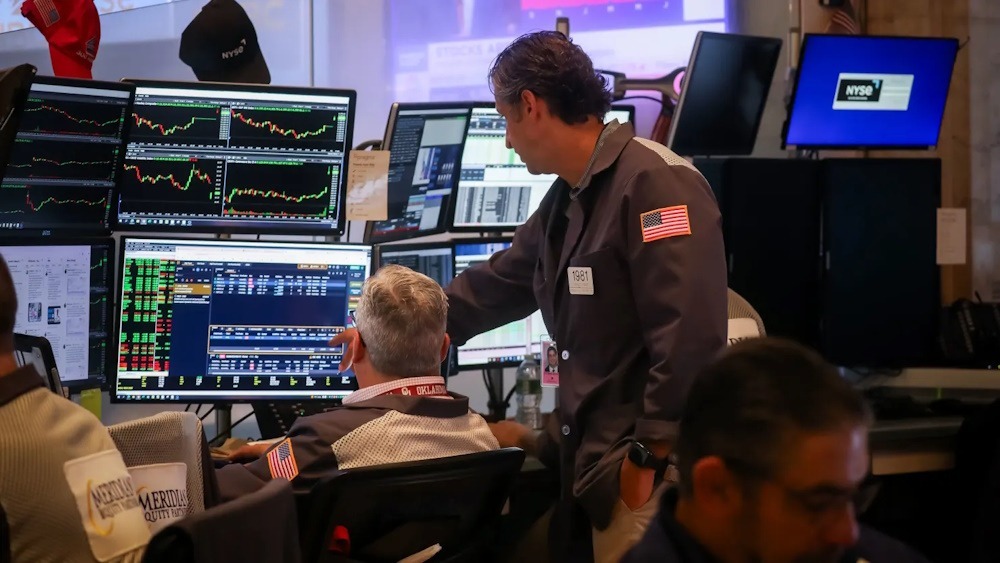
Stock futures pointed higher on Friday after the previous session saw the blue-chip Dow Jones Industrial Average and the benchmark S&P 500 snap four-day losing streaks, supported by encouraging inflation data. Nasdaq 100 futures and S&P 500 futures rose 0.2% and 0.1% respectively, while Dow-linked futures dipped by less than 0.1%. On Thursday, the Nasdaq Composite, S&P 500, and Dow closed with gains of 1.4%, 0.8%, and 0.1% after the release of the November Consumer Price Index, although all three major indexes remained on track to finish the week lower.
Friday is a “quadruple witching” session, when index options, single-stock options, index futures, and index futures options expire simultaneously. This alignment often leads to elevated trading volumes as investors close, roll over, or hedge positions, particularly during the final hour of trading, potentially amplifying short-term market volatility.
In broader markets, the 10-year US Treasury yield rose to 4.15% from 4.12% after the Bank of Japan raised interest rates to their highest level in 30 years. Bitcoin climbed to around $88,000 after dipping near $84,600 overnight. The US dollar index gained 0.3% to 98.71. Gold futures, which had surged to a record above $4,400 an ounce in the prior session, slipped 0.3% to $4,350, while US crude oil prices declined 0.4% to $56.35 a barrel.
On the corporate front, Nike shares plunged 11% after the company warned of a current-quarter sales decline due to weakness in China. Oracle shares jumped 4% following reports that China’s ByteDance plans to form a joint venture giving a group of US investors, including Oracle, a controlling stake in TikTok. Semiconductor stocks also advanced ahead of the opening bell, with Nvidia, Advanced Micro Devices, Broadcom, and Micron Technology rising roughly 1% to 2%.