
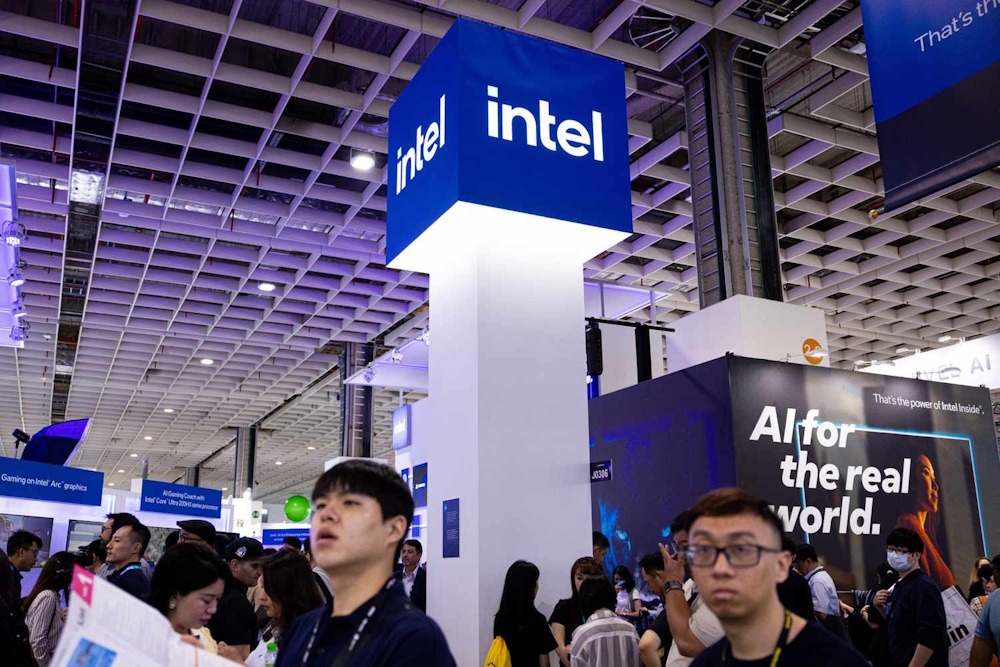
Shares of Intel sank by more than 12% in premarket U.S. trading on Friday after the chipmaker unveiled a fourth-quarter loss and a dour outlook for the current quarter. The company, whose stock price has recently about doubled thanks to fresh cash injections from major investors including artificial intelligence-darling Nvidia, Japanese tech conglomerate SoftBank and even the U.S. government, posted a net loss of $333 million for the final three months of its fiscal year, worse than market analysts had anticipated.
Executives flagged the impact of supply shortages caused by soaring demand from data centers, which house the chips that power cutting-edge AI models. David Zinsner described the shortages as an industry-wide problem that could extend well into 2026. For its first quarter, Intel said it now expects to slide to a loss of $0.21 per share, underlining the challenge facing CEO Lip-Bu Tan as he attempts to keep the California-based group in an AI chip race being mostly dominated by Nvidia and peer Advanced Micro Devices. Intel’s foray into chip foundries, which turn digital blueprints into physical processors, has also lagged behind giants such as Taiwan Semiconductor Manufacturing Co.
“I’m disappointed that we are not able to fully meet the demand in our markets. My team and I are working tirelessly to drive efficiency and more output from our fabs,” Tan told investors. A lack of key updates on the business also disappointed traders. Intel said it would provide much-anticipated figures on new customers for its chip fabrication division until later this year, while there was a dearth of information about buyers of the firm’s next-generation 14A manufacturing process technology. In a note, analysts said “some investors were hoping for a big name” customer for the 14A, “like possibly Apple.” Still, Intel’s data-center unit has remained robust, notching sales of $4.7 billion in the fourth quarter, a jump of 9% compared to a year earlier. Group-wide, revenue for the quarter ended on December 27 declined by 4.1% versus a year ago to $13.7 billion, although the top-line figure still beat estimates of $13.43 billion.
Markets are also keen to see how demand for Intel’s latest manufacturing process, the 18A, evolves after the chips were first made available for sale earlier this month. Analysts at Stifel said they view the second half of this year to the first half of 2027 as “a potential catalyst window, in which Intel will host their first Investor Day under, and could denote” an inflection point for firm’s “long-term 14A volume commitments and advanced packaging ramps.”