
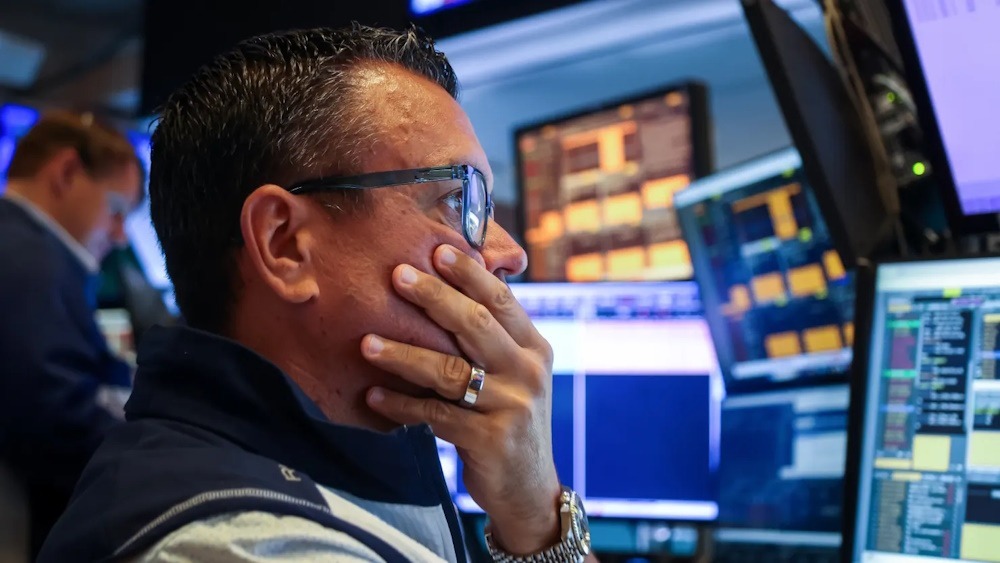
The US market concluded the previous day on a downward trajectory, as a risk-averse sentiment took hold among market participants. The recent unwinding of the precious metals trade, coupled with unexpectedly high producer inflation data, has cast a shadow over market sentiment. The significant development of the day was President Donald Trump’s nomination of former Federal Reserve governor Kevin Warsh to assume the role of central bank chair. The benchmark index declined by 0.4%, closing at 6,939.65 points, while the tech-heavy index decreased by 0.9%, concluding at 23,461.82 points. The blue-chip index also fell by 0.4%, settling at 48,892.47 points. Following a significant surge, precious metals experienced a sharp decline as investors sought to secure their substantial profits. Gold prices were on track for their most significant decline in decades, while silver was poised for an unprecedented drop. In the initial month of the year, the S&P 500 experienced an increase of 1.4%, the Nasdaq saw a rise of 0.9%, and the Dow recorded a gain of 1.7%. Following the conclusion of 2025, which marked a third consecutive year of double-digit percentage increases, January presented a tumultuous period for investors. The trade and geopolitical decisions made during the Trump administration created an environment of uncertainty, which in turn fueled a persistent demand for safe havens, resulting in gold and silver prices reaching unprecedented heights. “When January experiences an increase of 0-2%, the subsequent 11 months have recorded a decline only once in historical data,” observed Ryan Detrick.
He also highlighted that historically, February has exhibited weakness for the benchmark S&P 500. “February is one of two months, with September being the other, that has exhibited a negative average since 1950, as well as over the past 10 years and the past 20 years,” Detrick stated. “(Warsh) will go down as one of the GREAT Fed Chairmen, maybe the best,” Trump stated. Warsh was regarded as one of the leading candidates for the position. His nomination arrives amidst a divergence between Trump and current Fed Chair Jerome Powell regarding the condition of interest rates. Trump has consistently mocked Powell for his reluctance to reduce interest rates and has issued threats regarding his potential dismissal. The administration has initiated an investigation into the central bank chief, a decision that Powell, in an unprecedented statement, attributed to the Fed’s independence in rate-setting, which does not align with the president’s preferences. Market movements exhibit a degree of restraint, particularly in light of the significant alterations observed. “That’s largely because Warsh was both an unsurprising pick and someone who is already a known figure in Fed circles,” stated Steve Sosnick. Warsh held the position of Fed Governor from 2006 until 2011. In 2017, he was unsuccessful in his bid for the Fed chair position against Powell. Recently, Warsh has largely aligned himself with Trump’s calls for lower rates in the past year, but he has been a long-time critic of the ultra-loose monetary policy pursued by the Fed since the financial crisis, including the central bank’s expanded balance sheet. “Stocks may be a bit disappointed in that he is not particularly dovish – odd considering that the president seemed to really want someone who would share his desire for lower rates,” Sosnick added.
Warsh’s nomination is expected to alleviate apprehensions regarding the Fed’s independence, considering his historical stance and previous hawkish tendencies. In a notable development, Trump has expressed his endorsement of a bipartisan spending agreement reached by Senate Republicans and Democrats, aimed at preventing an imminent government shutdown. He conveyed his support through a post on Truth Social, advocating for collaborative efforts. The agreement would allocate funding to the majority of federal agencies, deferring contentious immigration matters for subsequent discussions. Reports indicated that leaders from both the Democratic and Republican parties had reached an agreement on the deal, though the timing of a Congressional vote on the issue remained uncertain. Lawmakers face a deadline of midnight on Friday to unveil additional spending measures for the federal government. Traders were presented with economic data prior to the opening bell, which further substantiated the Federal Reserve’s decision earlier this week to maintain interest rates at their current levels. The core December producer price index increased by 0.7% month-over-month and rose by 3.3% year-over-year. Both figures exceeded the consensus estimates significantly. The postponed PPI data indicated that inflation remains a persistent issue. “PPI data exhibited strong performance.” The three-month and six-month moving averages are the hottest since 2022,” stated Diane Swonk.
The elements contributing to the Federal Reserve’s target measure of inflation, the PCE index, were not as unfavorable; however, they highlight the necessity for the Fed to pause and assess forthcoming developments. Chair Powell’s caution in refraining from declaring victory over inflation is warranted, she added. After the close Thursday, comfortably exceeded profit and revenue expectations for the holiday quarter, its fiscal first quarter, experiencing its strongest quarterly iPhone sales growth performance in over four years. iPhone sales surged 23.3% year-on-year to $85.27 billion, representing the most significant increase since the fourth quarter of 2021. The technology behemoth has projected revenue growth exceeding expectations, reaching as high as 16% for the March quarter, driven by robust demand for its iPhones, a significant recovery in China, and increasing demand in India. Nonetheless, Apple’s shares experienced a decline of more than 1% as performance in other segments of the company was less favorable. Verizon experienced a notable increase in its stock price following the release of fourth-quarter earnings and revenue that surpassed market expectations. The company also offered a positive outlook for 2026, indicating the onset of a strategic turnaround. Chevron’s stock experienced an uptick following the release of its fourth-quarter profits, which, while lower than previous periods, exceeded analysts’ expectations. The company has prioritized cost-cutting measures and operational efficiency to navigate the challenges posed by declining crude prices anticipated throughout 2025. In other developments, shares experienced a notable increase following the storage-chip manufacturer’s substantial profit exceeding expectations and an upward revision of guidance, driven by demand for data-center and AI-related memory products that surpassed forecasts.
Gold prices experienced a significant decline, as Warsh’s nomination alleviated concerns regarding the independence of the central bank. The concerns have enhanced gold’s appeal as a safe haven, playing a significant role in the recent substantial increase in the price of the yellow metal. Following a near approach to $5,600 per ounce early on Wednesday, profit-seeking buyers intervened to secure gains, thereby bringing an end to Spot’s eight-day winning streak. Spot gold experienced a decline of 9.7%, settling at $4,849.74 per ounce, while the April contract decreased by 9%, also reaching $4,849.74 per ounce. Other precious metals experienced a decline on Friday following a week characterized by significant volatility. Spot experienced a significant decline of 27.9%, settling at $83.41 per ounce, following a record high on Thursday, while another spot decreased by 18.4%, reaching $2,136.55 per ounce. Oil prices fluctuated following a three-day rally, yet remained poised for significant weekly gains as traders concentrated on the possibility of U.S. military intervention in Iran were last up 0.5% to $69.96 a barrel, and were up 0.6% to $65.80 a barrel. Both benchmarks were positioned to achieve an increase exceeding 7% this week. The Organization of Petroleum Exporting Countries and allies, known as OPEC+, is scheduled to convene on Sunday, with recent reports suggesting that the cartel is expected to maintain its current output levels.