
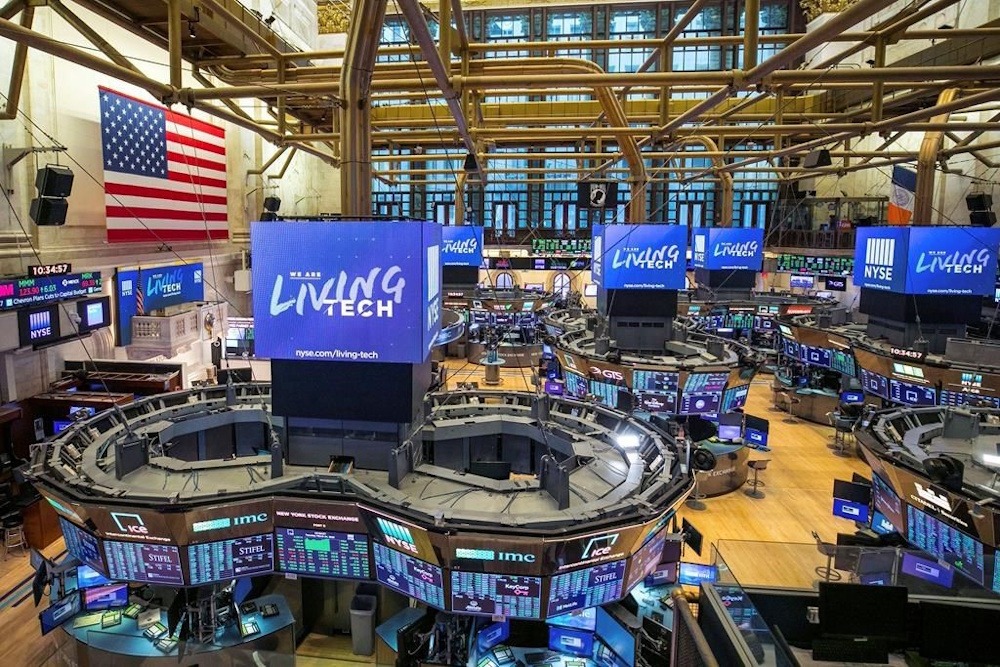
The Dow Jones Industrial Average experienced a decline of 0.5%, translating to a decrease of 267.50 points, ultimately closing at 49,395.16. It is noteworthy that 12 of the 30 components of the index concluded the session in positive territory, whereas 18 finished in negative territory. The tech-heavy Nasdaq Composite concluded at 22,682.73, declining by 0.3% due to the lackluster performance of major software companies. The S&P 500 experienced a decline of 0.2%, concluding the session at 6,861.89. Nonetheless, seven of the 11 broad sectors of the broad-market index concluded in positive territory, whereas four finished in negative territory. The Energy Select Sector SPDR rose 1.9%, while the Technology Select Sector SPDR increased by 1%. Conversely, the utilities sector and the real estate sector experienced declines of 1.7% and 1.3%, respectively. The CBOE Volatility Index, often referred to as the fear gauge, experienced an increase of 3.1%, reaching a level of 20.23.
On Thursday, the trading volume reached 16.4 billion shares, which is below the 20-session average of 20.5 billion shares. The S&P 500 recorded 27 new 52-week highs alongside six new 52-week lows. The Nasdaq Composite recorded 62 new 52-week highs alongside 146 new 52-week lows. Private market and alternative assets manager Blue Owl Capital Inc. sold $1.4 billion in loan assets. As a result, the company has restricted investor liquidity in its retail-oriented Blue Owl Capital Corporation II Fund and has definitively ceased private credit fund redemptions. In light of the prevailing issues related to liquidity and transparency within private credit markets, investors divested their holdings in these firms. As a result, the stock prices of Blue Owl Capital, Blackstone Inc. and Apollo Global Management Inc. experienced declines of 5.9%, 5.3%, and 5.2%, respectively. The geopolitical tensions between the United States and Iran escalated as a result of discord surrounding Iran’s nuclear program.
President Donald Trump has signaled that a decision regarding a military strike in Iran will be forthcoming within the next 10 days. Consequently, crude oil prices experienced an increase of approximately 2%. The Department of Labor reported a decline in initial claims by 23,000, bringing the total to 206,000 for the week ending February 14, which is below the consensus estimate of 221,000. The data from the previous week was adjusted slightly upward to 229,000, an increase from the earlier figure of 227,000. Continuing claims, which represent individuals who have previously received government assistance and are reported a week behind, rose by 17,000 to reach 1.869 million for the week ending February 7. The level from the previous week was adjusted downward by 10,000, now standing at 1,852,000, a revision from the earlier reported figure of 1,862,000.
The U.S. Census Bureau and the U.S. Bureau of Economic Analysis have indicated that the trade (goods and services) deficit surged to $70.3 billion in December, markedly exceeding the consensus estimate of $58.4 billion. The November metric has been adjusted downward to $53 billion, a revision from the previously reported $56.8 billion. The Philadelphia Fed Index registered at 16.3, surpassing the Zacks Consensus Estimate of 10 and the January figure of 12.6. The National Association of REALTORS indicated that pending home sales in January experienced a decline of 0.8% compared to the previous month and a decrease of 0.4% on a year-over-year basis. For the week ending February 13, U.S. commercial crude oil inventories, excluding those in the Strategic Petroleum Reserve, saw a reduction of 9.0 million barrels compared to the prior week. In December, Leading Indicators experienced a decline of 0.2% compared to the prior month, aligning with the Zacks Consensus Estimate. The metric for November experienced a decline of 0.3% on a month-over-month basis.