
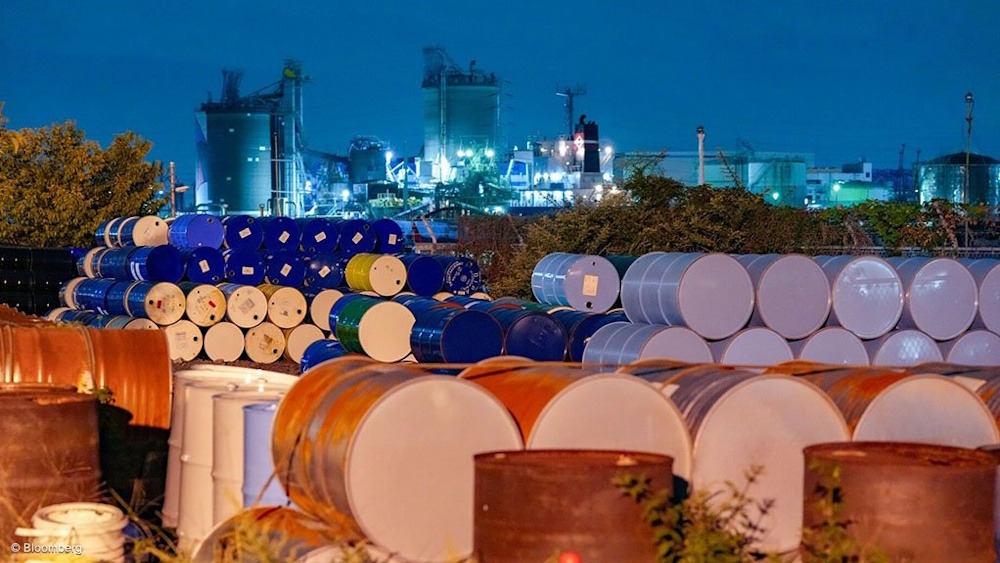
U.S. crude oil on Friday recorded its largest weekly increase in futures trading history, driven by the intensifying conflict in the Middle East, which has caused significant disruptions to global fuel supplies. West Texas Intermediate futures experienced a notable increase of 12.21%, translating to a rise of $9.89, culminating in a closing price of $90.90 per barrel. Global benchmark Brent experienced a notable increase of 8.52%, translating to a rise of $7.28, ultimately closing at $92.69 per barrel. U.S. crude experienced a remarkable increase of 35.63%, marking the largest weekly gain in the history of the futures contract since its inception in 1983. Brent experienced an increase of approximately 28%, marking its most significant weekly gain since April 2020.
President Donald Trump on Friday called for the unconditional surrender of Iran, heightening concerns about a potential extended conflict that could disrupt the global oil and gas markets. The ongoing conflict has effectively halted traffic in the Strait of Hormuz, a vital artery for energy supply shipments, bringing it to a near standstill. Qatar’s energy minister, Saad al-Kaabi, informed on Friday that crude prices might ascend to $150 per barrel in the forthcoming weeks should oil tankers face obstacles in traversing the Strait. Kaabi stated that this could “bring down the economies of the world. We anticipate that all parties who have yet to invoke force majeure will do so in the coming days if this situation persists,” Kaabi stated. “All exporters in the Gulf region will have to invoke force majeure.” “If they don’t, they will eventually bear the legal liability for that, and that is their decision.” The Trump administration on Friday unveiled a $20 billion insurance program aimed at oil tankers operating in the Persian Gulf; however, this initiative had minimal impact on stabilizing the crude market.
Iraq has halted production by 1.5 million barrels per day, according to Iraqi officials. Kuwait has initiated production cuts due to a lack of available storage capacity, sources informed The Wall Street Journal on Friday. “The market is transitioning from assessing pure geopolitical risk to contending with concrete operational disruptions,” stated Natasha Kaneva. Kaneva indicated that production cuts may reach 6 million bpd by the end of next week should the Strait remain closed to traffic. JPMorgan anticipates that the United Arab Emirates will experience supply constraints in the upcoming week.
The average price for a gallon of regular gasoline increased by nearly 27 cents in the week leading up to Thursday, reaching $3.25, as reported by the U.S. travel organization AAA. The conflict between Iran and the United States reached its seventh day on Friday. During a conference on Thursday, U.S. Defense Secretary Pete Hegseth stated that the U.S. had “only just begun to fight.” He informed “Iran is under the impression that we cannot maintain this, which represents a significant misjudgment.”