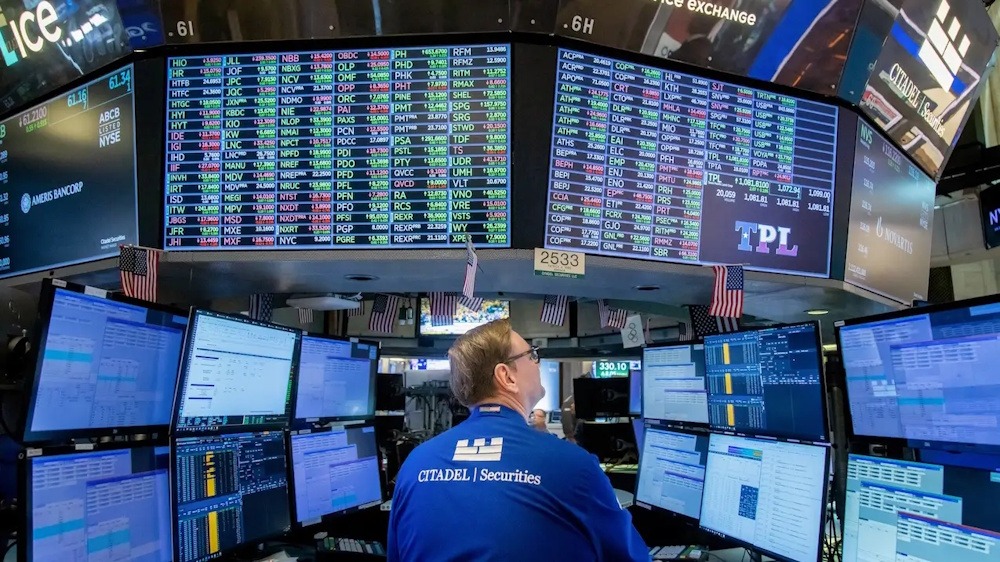
Global chip stocks experienced a significant decline on Tuesday, as a widespread selloff in technology shares propagated from Asia to Europe, posing a risk of pulling Wall Street down at the opening. This downturn was driven by increasing apprehensions regarding inflated AI valuations and the potential for elevated U.S. borrowing costs. In South Korea, memory chip giants Samsung Electronics and SK Hynix, which together account for roughly half of the benchmark Kospi index’s market capitalisation, both experienced declines exceeding 12%. The losses were significant enough to prompt a 20-minute trading halt on the Kospi, marking the fourth such suspension this year, with the index declining by 10% for the day.
Japanese stocks also fell sharply, with the Nikkei Stock Average closing 3.55% lower. The selling pressure extended into Europe, with ASML, the continent’s most valuable company, experiencing a decline of over 5% by 04:35. Infineon, ASM International, and STMicroelectronics experienced declines ranging from 5% to 8%. U.S. premarket trading indicated a challenging start to the day. Micron experienced a decline exceeding 8%, whereas Intel and Marvell Technology each saw a decrease of approximately 7.8%. Nvidia, AMD, and TSMC experienced declines ranging from 3% to 7%. The iShares Semiconductor ETF experienced a decline of 4.6%. The broader futures for the Nasdaq 100 experienced a decline of 2.7%, positioning them at the forefront of the downturn among Wall Street contracts.
In comparison, S&P 500 futures decreased by 1.4%, while Dow futures saw a reduction of 0.6%. SpaceX shares experienced a decline of over 4% in premarket trading, further extending losses following a $400 billion selloff on Monday that erased a significant portion of the gains from its recent market debut. Traders are currently factoring in 50 basis points of Federal Reserve rate increases by December, a figure that has doubled from expectations just two weeks prior, as investors recalibrate to a more hawkish policy orientation under the leadership of new Federal Reserve Chair Kevin Warsh.
Elevated borrowing costs pose a challenge to the justification of debt-funded AI infrastructure expenditures that have significantly supported the sector’s recent rally, particularly at prevailing valuations. Valuation concerns have intensified following a significant rally earlier this quarter, which was prompted by the ceasefire in the Middle East. The pullback on Tuesday follows a prior advance in chip stocks, as the Philadelphia SE Semiconductor Index reached a record high the day before. Micron is set to release its latest quarterly results on Wednesday, with investors keenly anticipating insights into the demand trajectory for memory and AI chips.