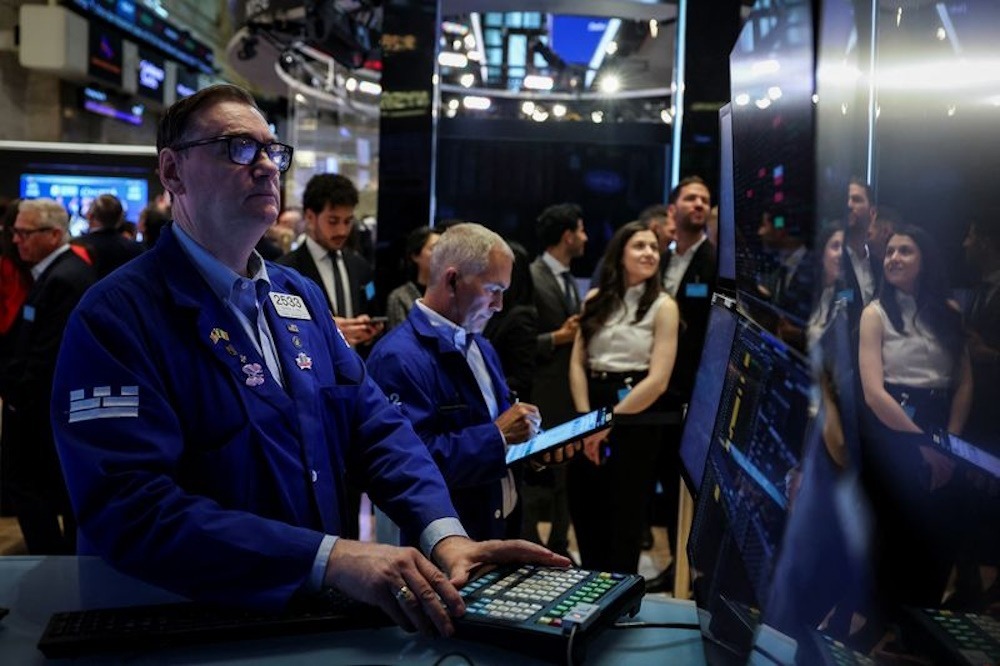
Global stock markets have experienced a decline as investors offloaded technology shares, driven by concerns that the upcoming US midterm elections may hinder the progress of artificial intelligence. The sell-off, which originated in the US and subsequently extended to Asia and Europe, has resulted in the erasure of trillions of dollars from the stock valuations of prominent technology companies. In the United States, the technology-focused Nasdaq share index experienced a decline of 5.5% on Thursday. Asian markets experienced significant declines on Friday, while European markets commenced the day on a downward trajectory. Investors express concern regarding the potential for stricter regulations on AI, following opposition from Democratic candidates to the data centers essential for the technology’s development. The decline in shares is compounded by apprehensions regarding the potential return on the substantial investments being made in AI.
The recent sell-off in US equities resulted in a significant decline in the market capitalisation of the so-called magnificent seven tech firms, which encompass Apple, Nvidia, and Tesla, collectively losing a trillion dollars in value within a single trading session. Notably, Nvidia’s shares experienced a drop exceeding 9%. Shares in Elon Musk’s companies SpaceX and Tesla experienced significant declines, dropping 8% and nearly 11% respectively, resulting in a reduction of over $300 billion in the firms’ market value. Musk had allocated nearly $450 million to support Republican campaigns, which included a minimum of $45 million directed toward Ken Paxton’s bid for the Texas Senate seat. However, Texas experienced a shift toward the Democratic Party during the electoral wave on Tuesday. The significant decline in the Nasdaq resulted in a loss of approximately $2.5 trillion (£1.9 trillion) in market value. The index is currently in what market observers refer to as correction territory, defined as a situation where an index or company value declines by at least 10% from its recent peak.
However, the substantial increases observed in technology stocks recently-fueled by the excitement surrounding artificial intelligence-indicate that even following Thursday’s decline, the Nasdaq remains elevated compared to its position a year prior, and has risen approximately 4.6% since the beginning of this year. The sell-off in the United States extended its reach into Asia on Friday. The Nikkei share index in Japan experienced a decline of 6%, driven primarily by significant drops in the stock prices of memory chip manufacturers Kioxia and Tokyo Electron. In South Korea, the Kospi index experienced a significant decline of over 8% at one juncture, activating a circuit breaker, which is a mechanism designed to temporarily suspend trading in order to mitigate panic selling. The Kospi ultimately concluded the trading session with a decline of 6%, as shares of chipmaker SK Hynix experienced a drop exceeding 10%. European markets commenced trading on Friday with a downward trajectory, though the declines were relatively moderate due to the indexes comprising a smaller proportion of technology stocks. The UK’s FTSE 100 index experienced a decline of 1.6%, whereas Germany’s Dax index recorded a decrease of 1.3%. Dan Coatsworth said investors were worried about the huge amounts of money being spent on AI with “no clear idea of when, or whether, there will be payback”.
“The midterm election result muddied the waters as the Democrats now have more influence and could slow down the pace of data centre roll-outs and look at new ways to regulate the sector,” he added. “The AI story has all been about speed, and now there is a danger of it moving to a lower gear, and some of the wheels falling off.” He also appeared to take aim at voters too. “The Stock Market crashed today because the Dumocrats had a big Tuesday – So sad to see, you only have yourselves to blame!” he wrote on Truth Social. Some technology executives have indicated that they were surprised by the opposition to data centers during the midterm elections. OpenAI president and co-founder Greg Brockman expressed that he thought the response to data centers had taken everyone by surprise, indicating that further efforts were necessary to align community support. “A lot of our shift over the course of this year has really been to realise that from San Francisco trying to build infrastructure in Texas, Georgia, and other places, you can’t just tweet and say: ‘This is going to be good.’ You need to be in those communities,” Brockman said.