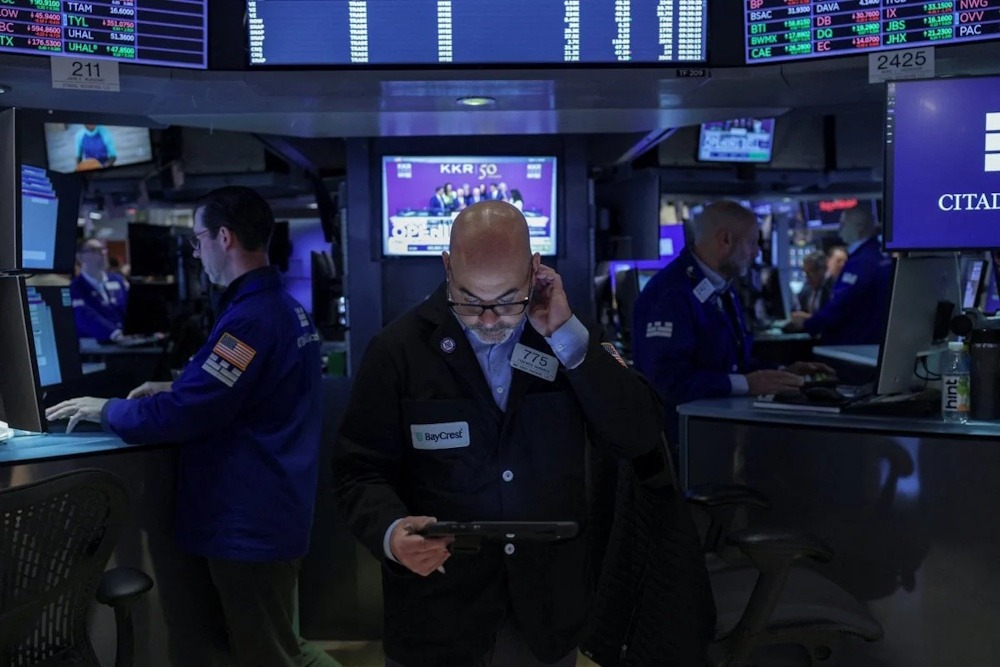
US stock futures saw a notable uptick on Friday, largely propelled by a rise exceeding 2% in Nasdaq 100 contracts. This movement occurred as investors emerged from the Thanksgiving holiday lull, eagerly re-entering the market for distressed AI-related stocks. Wall Street’s primary indexes have undergone notable fluctuations this week, driven by Jensen Huang’s reappointment as Nvidia CEO and Anthropic’s brief dip below its initial public offering price, which has added to the volatility in the AI sector. Investors have fluctuated between pursuing value in the wake of a notable market downturn and contending with escalating costs, high debt burdens, and the sufficiency of their investment returns. “There have been some signs that the tech selloff has stabilised for now, and that risk appetite is returning to markets,” analysts said in a note. Despite the turbulence, the S&P 500 and Nasdaq are positioned for their best week since April and August, respectively, while the blue-chip Dow is on track for its strongest week since April 2025.
However, the gains have done little to mitigate the losses sustained in November. The S&P 500 and Nasdaq are set to face their most difficult November since 2008, driven by concerns over tighter AI regulation following the Democrats’ midterm election victory and the expectation that monetary policy will remain restrictive. Investors are assessing the ramifications of the recently announced tariffs by the Trump administration, disclosed on Wednesday, which pertain to imports from 14 trading partners. Traders are almost entirely factoring in a Federal Reserve interest rate increase in December, after this week’s data revealed that the US economy grew at a notably faster rate than earlier projections in the third quarter, coupled with an additional rise in inflation during October. All three major indexes entered a technical correction this month, with the Nasdaq 100 at one point declining nearly 20% from its October peak.
At 6:42 a.m., the Dow E-minis recorded an increase of 646 points, reflecting a rise of 1.29%, while the S&P 500 E-minis saw an uptick of 118 points, corresponding to a gain of 1.64%. The Nasdaq 100 E-minis recorded an uptick of 581.25 points, translating to a growth of 2.23%. Nvidia, at the forefront of the AI boom, experienced a 3.6% increase in premarket trading; however, the stock continues to trade over 37% below its record high from October based on its last close. Other chipmakers that encountered difficulties this month have likewise experienced a rebound, with AMD advancing by 4.4% and Broadcom climbing by 3.4%. AI hyperscalers Alphabet, Amazon.com, Microsoft, Meta Platforms, and Oracle saw increases between 2.1% and 4.4%. Neocloud firms CoreWeave and Nebius recorded increases of 6.5% and 7%, respectively. Other AI beneficiaries, including data-storage firm Sandisk, optical-products maker Lumentum, and server maker Dell, also experienced gains.
Gold and silver miners experienced a notable rally as the prices of precious metals rebounded from a challenging few sessions. Newmont experienced a 5% increase, whereas the Global X Silver Miners ETF saw a rise of 5.7%. Altria experienced a decline of 2% following the announcement that the Marlboro manufacturer is contemplating a potential all-cash offer for Imperial Brands and is in discussions regarding a transaction involving a segment of the British tobacco company’s operations with another entity. Vertex Pharmaceuticals experienced a decline of 7.5% following the announcement that the US Food and Drug Administration has extended its review period for the company’s kidney-disease drug by as much as three months. Trading volumes may remain subdued in the wake of Thursday’s Thanksgiving holiday, as US equity markets will operate on a shortened schedule on Friday.