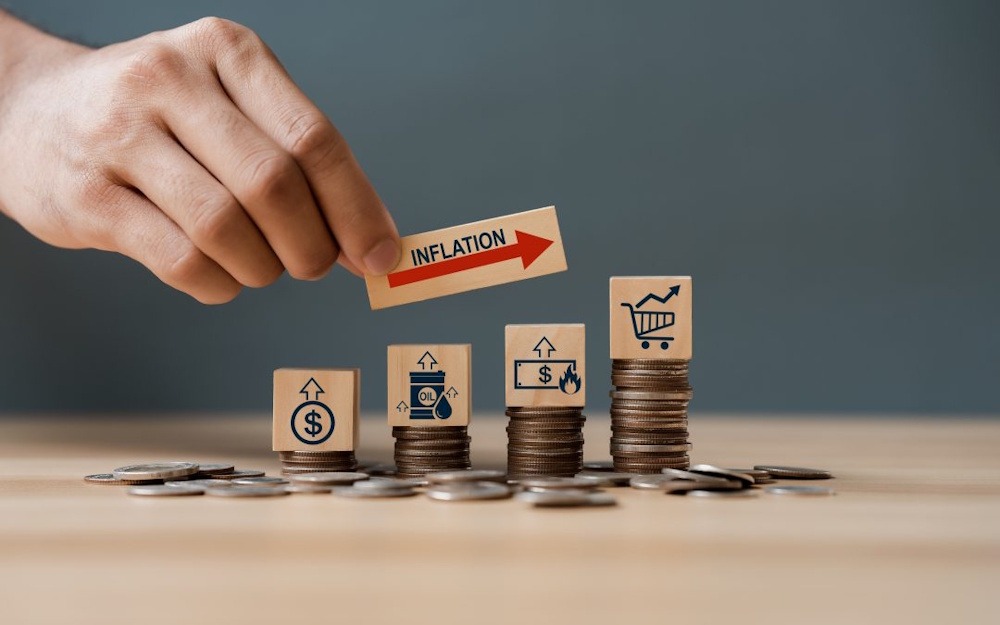
U.S. producer prices increased significantly in September, marking the largest rise in 4-1/2 years, driven partly by an unprecedented surge in goods costs. This development serves as a recent indicator of energy-related inflationary pressures that may influence the Federal Reserve’s forthcoming interest rate decision. The producer price index for final demand increased by 1.3% on a month-on-month basis last month, surpassing expectations of 0.6% and the pace of 0.5% observed in August. Prices for final demand goods increased by 2.6%, marking the most significant rise since the inception of PPI calculations in December 2009, according to the Labour Department. More than 80% of this increase was due to a 10.8% jump in the index for final demand energy. Petrol prices, in contrast, surged by 20.3%. Trackers of diesel fuel, fresh and dry vegetables, jet fuel, and crude petroleum experienced an uptick, counterbalancing a significant 39.7% decline in chicken egg prices.
For final demand services, prices increased by 0.8%, marking the most significant rise since April. Almost half of the increase can be attributed to a 1.4% rise in margins for final demand trade services, as reported by the Labour Department. Additionally, the index for final demand transportation and warehousing services saw an advancement of 3.4%. Concerns have emerged that an increase in diesel prices, largely resulting from energy supply limitations linked to the Iran conflict, will elevate transport costs and subsequently impact a diverse array of goods. In the twelve months leading up to September, the Producer Price Index registered a rate of 6.3%, an increase from the prior figure of 5.6%. Economists had anticipated the figure at 5.3%. Crucially, the PPI encompasses components that contribute to the personal consumption expenditures price index, which is among the Federal Reserve’s favoured inflation metrics.
Wednesday’s reading follows a separate gauge of consumer price growth that also exceeded expectations, underscoring indications of rising inflation in the world’s largest economy. The Fed lifted interest rates in September in an effort to temper price increases back to its 2% target level, although markets are estimating only a one-in-three probability that the central bank will take similar action at its meeting on October 27-28. However, the Federal Reserve is anticipated to increase borrowing costs by a quarter of a percentage point once more at its concluding meeting of the year in December. “[T]he PPI was very hot in September, even worse than the CPI on Wednesday, underscoring that prices last month saw big upward momentum and while energy certainly played a large role, […] it doesn’t look like there will be much energy relief given how geopolitical conditions are worsening in both the Middle East and Ukraine and […] energy being this high for this long is inevitably bleeding into the underlying economy and pushing core prices higher,” analysts said in a note.
Elsewhere, a distinct data set indicated that retail sales increased by 0.8% last month, a deceleration from the growth of 1.3% observed in August. However, the number exceeded forecasts of 0.3%. Excluding automobiles and petrol, retail sales experienced a growth of 0.2%, whereas sales excluding automobiles increased by 0.9%, highlighting the impact of elevated fuel prices. “Admittedly, the strength in spending in August means that consumption growth is still on track to rise by a strong 3.3% annualized in the third quarter. But the weakness in September provides a poor handover to consumption growth in the fourth quarter,” analysts at Capital Economics said in a note.