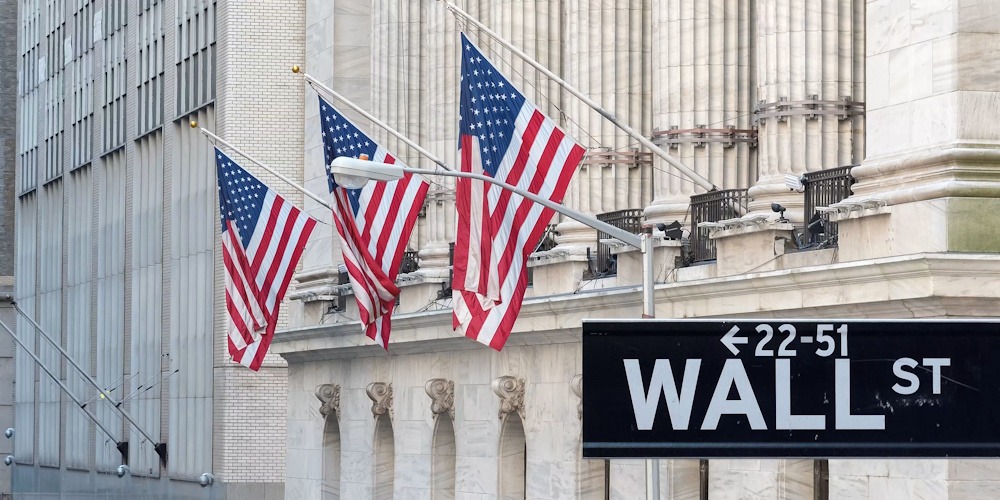
Stock futures on Wall Street exhibited a subdued performance on Tuesday, while oil prices persisted in their downward trajectory, as investors remained on standby for further information regarding a preliminary peace agreement between the United States and Iran. The Dow futures contract exhibited minimal movement, while S&P 500 futures experienced a decline of 5 points, equivalent to 0.1%. In contrast, Nasdaq 100 futures recorded an increase of 20 points, also representing 0.1%. “Markets have clearly stabilised this morning after the surge of optimism that surrounded the deal yesterday,” analysts noted. The primary U.S. averages experienced an uptick in the prior session, supported by the revelation of an agreement aimed at resolving the protracted conflict in the Middle East that has persisted for over three months. Concurrently, shares of SpaceX, the reusable rocket enterprise founded by Elon Musk, experienced a notable increase, continuing an upward trajectory that followed a remarkable public debut the previous week.
At the conclusion of trading on Monday, the blue-chip index recorded an increase of 469 points, representing a 0.9% rise. The benchmark index experienced a gain of 123 points, equating to a 1.7% increase, while the technology-focused index surged by 795 points, reflecting a 3.1% uptick. President Donald Trump has indicated that the Strait of Hormuz is expected to be fully reopened by Friday, coinciding with the scheduled meeting of representatives from Washington and Tehran in Switzerland for the formal signing of the interim peace deal. Speaking in France at the outset of a Group of Seven meeting, Trump asserted that the strait, which has been effectively closed for weeks, is already “partially opened.” He stated, “Ships are starting to go out now, and on Friday it will be completely opened.” However, some uncertainty has surrounded that timeline, according to the source. Citing senior U.S. officials, the report indicated that it may require two weeks for standard shipping operations to return to normal.
Meanwhile, Trump indicated that the text of the framework deal is set to be released on Friday, although other officials suggested it might be made public within two days, according to the source. Details remain limited, but reports indicate that, in addition to reopening the strait, the memorandum of understanding will prolong the existing ceasefire by 60 days and eliminate an American blockade of Iranian ports. U.S. Vice President JD Vance, who is set to attend the signing ceremony, remarked on Monday that “there are a lot of very important details to figure out.” Against this backdrop, Brent crude futures, the global oil benchmark, were last down by 1.7% to $81.72 a barrel. On Monday, the contract experienced a significant decline, reaching levels not seen in three months. Attention is now turning to the Federal Reserve, which is set to commence its latest two-day policy meeting later today. The central bank is expected to maintain interest rates at their current levels on Wednesday, as officials monitor rising inflationary pressures primarily attributed to a surge in petrol prices linked to Iran. Consequently, significant attention will be directed towards the post-decision remarks from the newly appointed Fed Chair Kevin Warsh.
In addition to the actions of the Federal Reserve, the Bank of Japan raised interest rates by 25 basis points on Tuesday. The central bank indicated its commitment to further tightening policy in response to persistent inflationary pressures. Alongside the widely expected increase, the BOJ detailed intentions to scale back its monthly bond purchases in the upcoming quarters. The Reserve Bank of Australia announced that it would leave borrowing costs steady; however, policymakers indicated that they might raise rates again if necessary, cautioning that “headline and underlying inflation are still too high.” In individual stocks, SpaceX continued to build on its momentum in after-hours trading, following a remarkable 19% increase on its second day of trading. SpaceX’s rapid ascent has resulted in a market capitalisation that rivals established stock market giants like Alphabet, the parent company of Google, Apple, the manufacturer of the iPhone, and Nvidia, a leader in artificial intelligence chip production.