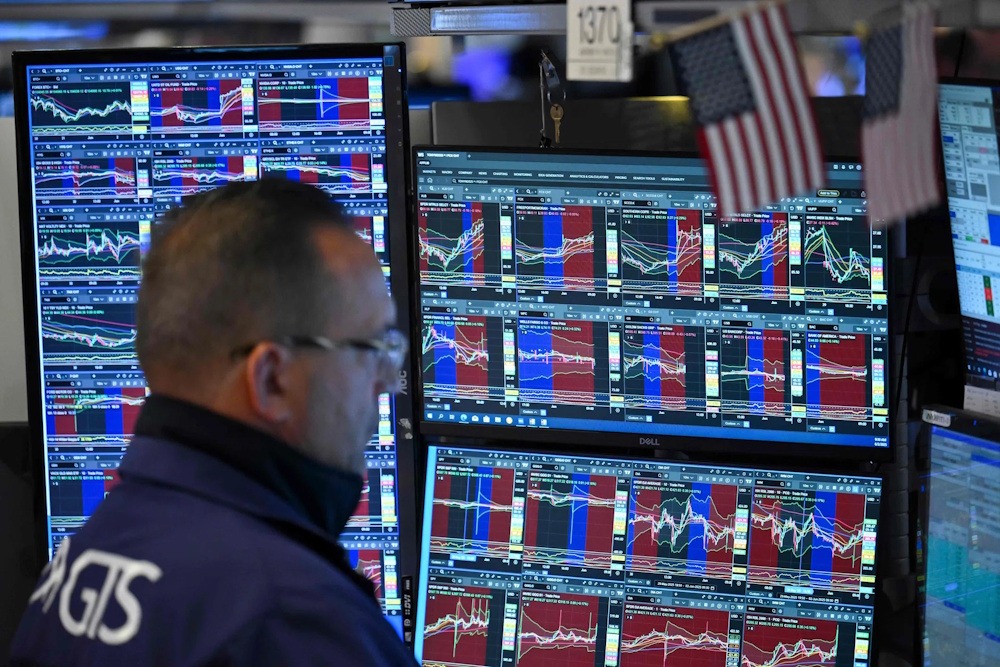
U.S. stock futures were mostly unchanged on Wednesday as traders watched news on the outlines of a preliminary peace agreement in the Middle East and prepared for a crucial interest rate decision from the Federal Reserve. According to a note from analysts, “[I]t’s another ‘no news is good news’ morning as stocks (mostly) witness an upward bias amid hope the Iran MOU-driven melt-up can continue for (at least) a few weeks longer.” As of 05:46, the Dow futures contract remained mostly unchanged, the S&P 500 futures had gained 9 points, or 0.1%, and the Nasdaq 100 futures had gained 185 points, or 0.6%. At session’s end, the main averages were all over the place. While tech-heavy Nasdaq Composite and benchmark S&P 500 both declined, blue-chip Dow Jones Industrial Average closed at a fresh record high. After a hectic start to the week that included the news of an interim agreement to stop the more than three-month war in the Middle East, traders appeared to be taking a break, as sentiment appeared muted.
The conclusion of the Federal Reserve’s two-day policy meeting is the main item on the schedule for today. In the first policy decision under new Chair Kevin Warsh, the central bank is anticipated to maintain interest rates in a range of 3.5% to 3.75%. Warsh, who was appointed by Trump, has been seen as caught between the two camps: one wants rapid rate reductions from the White House, while the other sees evidence of energy-induced inflation, which might lead to increases in borrowing costs. Jerome Powell, Warsh’s predecessor, often rejected Trump’s demands, which infuriated the president and sparked a discussion about the Fed’s traditional autonomy from political interference. Powell has continued in his role as Fed governor, stating that he and the bank are the targets of legal threats.
Many expected the Federal Reserve to begin a trail of rate cuts in 2026 as inflation looked to fall at year’s beginning. Concerns about a sudden spike in oil prices were heightened by an oil shock that occurred when the joint U.S.-Israeli attack on Iran began in late February and the Strait of Hormuz was closed. Finally, the market will get to digest the Federal Reserve’s updated quarterly economic forecasts, which may provide insight into the level of internal disagreement over interest rates. This year, analysts at BofA Securities expect inflation to rise, the unemployment rate to fall, and no interest rate decreases. However, they did note that “a few policymakers will likely project hikes.”
Reportedly, the United States and Iran have reached a 14-point framework agreement that revolves around a permanent truce, which includes Lebanon, the removal of the American naval blockade, and the unblocking of the Strait of Hormuz. According to reports, negotiations about Iran’s nuclear program are scheduled to commence following the ceremonial signing ceremony of the pact on Friday. The draft deal would also serve as a foundation for these conversations.